The Complexities of Mixed-Race Identities with Nicole Ocran and Emma Slade Edmondson from Mixed Up
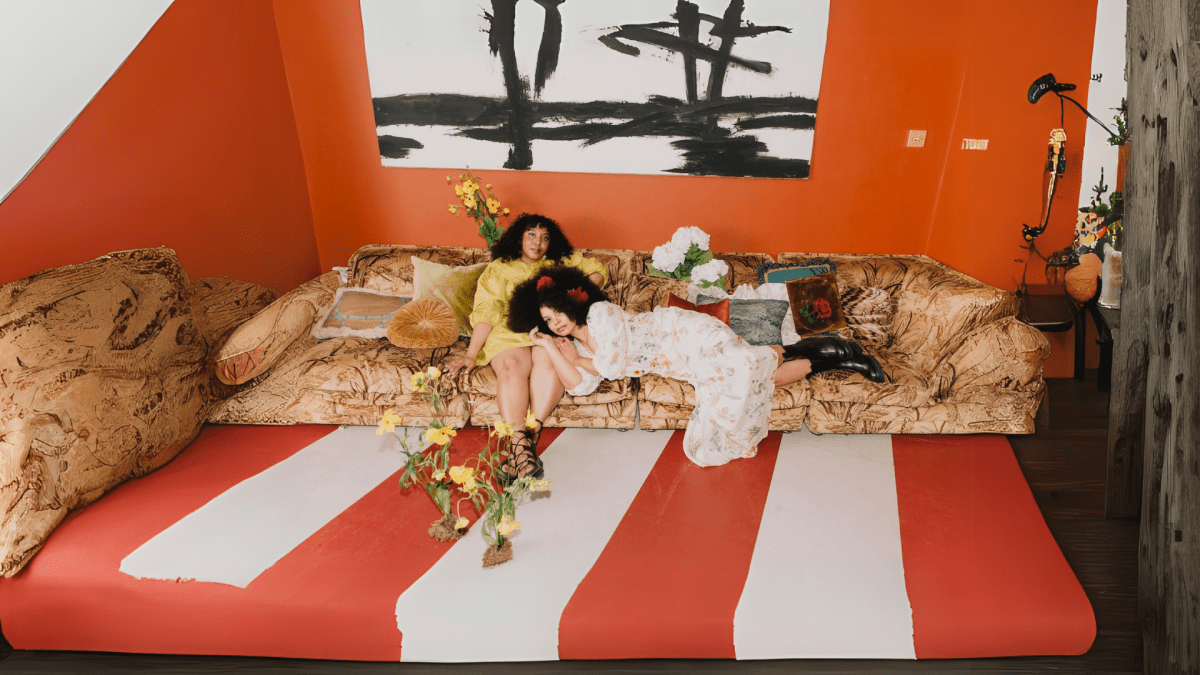
The mixed-race population is currently the fastest-growing demographic group, not only in the UK and the US, but perhaps even globally. This shift is evident in our daily interactions, reflecting the rich diversity of identities that shape our societies. Yet, despite its importance, discussions on the topic are often neglected—a situation Nicole Ocran and Emma Slade Edmondson are committed to changing.
Nicole, of Filipino and Ghanaian descent, was born in Washington, DC, but has lived in London for 13 years as a content creator and journalist. Emma, on the other hand, is of Jamaican and British descent (with German, Swiss, and Cornish roots) and has built her career in the field of social change and sustainability.
Together, they launched their critically acclaimed podcast, Mixed Up , in 2020, which quickly became essential listening for those seeking a deeper understanding of mixed heritage, diversity, and personal identity. Earlier this year, they published their first book, The Half of It , which explores in depth what it truly means to be mixed-race. Through chapters dedicated to culture, identity, interracial relationships, adoption, and the historical context of mixed-race people, they foster a greater appreciation of diverse identities.
In this interview, we delve into their journeys, their ideas such as the importance of giving a voice to mixed-race experiences in order to enrich the understanding of identities in an increasingly diverse world.
- Can you tell us a little about yourself and what inspired you to create your platform, which now includes an award-winning podcast and a book?
Emma: Nicole and I met in 2018 when I contacted her about a project focused on sustainable fashion. My goal was to encourage people to favor second-hand options over fast fashion.
We met one afternoon in a bar in Brixton, South London, to discuss this project, and our conversation naturally drifted to our experiences of mixed heritage. By the end of the evening, we already had the idea for a podcast. The following month, we recorded a teaser, and shortly after, we both bought microphones to begin the adventure.
Life then took over, and we took a short break. When the COVID-19 pandemic hit, we decided to seriously pursue the podcast. What truly motivated us to create this platform was the lack of mainstream dialogue about mixed-race experiences. While some academic work exists on the topic, we felt a broad public debate was desperately needed. The urgency of establishing this space intensified after the murder of George Floyd, highlighting the need for mixed-race people to have a platform to discuss these vital issues.
Our podcast quickly gained popularity because many people identified with our message. When we invited celebrities and well-known figures, they often shared that they had never had the opportunity to discuss their mixed-race experiences before. One guest even said, "I've been waiting for someone to ask me about this," highlighting that throughout his career, no one had ever asked him about his mixed-race identity.
Nicole: To add to that, we've always felt we had a book inside us. We'd wanted to write something for a long time, and it was during the first season of our podcast that our publisher approached us to discuss the possibility of publishing a book. It seemed like the perfect opportunity to delve deeper into the discussions we'd been having and share even more of our experiences.
- You both mentioned the impact of the recurring question "Who are you?". How has this question influenced your personal journeys in understanding and accepting your mixed-race identities?
Nicole: One of our first podcast episodes is titled "What Are You?" I mentioned in that episode that it could very well be the title of my memoirs, or even what would be inscribed on my tombstone. Thinking back on the many times I've been asked this question, I realize it's always made me feel out of place. I've often felt like someone was trying to trap me in some way. Instead of bringing me a sense of inner peace or comfort, this question has long left me with a feeling of discomfort and apprehension, as if I had to anticipate the other person's reaction to my answer.
In many cases, this question acted as a catalyst in my journey towards accepting my mixed-race identity. It awakened in me the desire to reclaim my vision of myself and my personality.
From the very beginning of our podcast, we noticed that it's often others who impose their perceptions of our identities and experiences. We never felt allowed to express ourselves honestly in a way that felt safe, as if people were trying to distort our identities to fit their own narratives.
So, yes, the impact of this question has been particularly significant for me over the years.
- How do you think the representation of mixed-race people in the media has evolved over the years? Are there any shows, films, or characters that you feel have accurately represented mixed-race identities?
Emma: There's a common perception that, at a certain point, we were everywhere, especially in advertising. It's true that there have been periods when mixed-race people were more visible, but these representations often felt superficial. For example, in the UK, when people think of mixed-race people, they generally picture someone of Black and white descent, often with fair skin and curly hair. While these portrayals do appear in family scenarios in advertisements, they offer a very reductive view of the mixed-race experience.
Currently, we are beginning to see real-life experiences of mixed-race people integrated into narratives, which is a significant shift. However, it is at this point that representation can become confusing for some.
Nicole: Growing up in the United States, I wouldn't say the country particularly excelled in representing mixed identities. While there are comedies like Mixed-ish* , which are specifically designed for this representation, I haven't had the chance to watch it in its entirety, so I can't comment on its quality.
One difficulty I've encountered is that, in the media, the majority of mixed-race people represented, particularly on television and in film, are generally of Black and white descent. While we are seeing more mixed-race characters of Asian and white descent, I wouldn't want to reduce this to a mere trend. It doesn't reflect my personal history, and I would like to see more representations of Black and Asian mixed-race people, especially within mixed households, but I haven't found them yet.
In the UK, I've noticed that depictions of interracial families seem more common than in the US. Typically, when we see such depictions in the US, they are often surrounded by conflict or problems, particularly in relationships between Black and white people.
- How important is it to discuss origins and identity from a young age, and how can parents or guardians facilitate these conversations?
Emma: It's crucial to address these discussions as early as possible. Studies show that children as young as 24 months begin to reason about others' behavior based on ethnicity and physical characteristics like skin color. They formulate hypotheses about why people act a certain way and use ethnicity to establish expectations about others' behavior.
Between the ages of three and five, children begin to use these “ideals” to choose their playmates, determining who to include or exclude. This highlights the importance of addressing these topics, both to raise your children's awareness of how they might be treated and to teach them the importance of inclusion. It is essential that they understand how the world works and the context in which others make decisions and judgments, in order to help them avoid prejudice.
These conversations are especially important for mixed-race children. We have often heard parents and their mixed-race children express that many mono-racial parents** struggle to fully grasp their children's experiences. This is understandable, as these parents may not have lived the same realities. While mixed-race children may sometimes identify with mono-racial experiences, some aspects of their own lives remain completely foreign to them.
Nicole: I would add that it is essential to encourage children to ask questions from a very young age. Although I don't yet have children, I am drawing on my own childhood experiences. I often felt that assumptions were being made about me, without me having the words to describe what I felt in the face of judgments, microaggressions*** or macroaggressions****.
We cannot expect children to understand the difference between microaggressions and macroaggressions, but it is crucial to teach them how to express their discomfort. They need to learn to articulate their experiences to trusted individuals, whether parents, guardians, teachers, or grandparents.
I grew up in a proud immigrant family in the United States, celebrating our heritage, but we rarely discussed these topics explicitly. Now, as an adult, I have frequent conversations with my parents about identity because I've acquired the language to explore these issues and I'm curious about their perspectives. If I had had these discussions during my childhood or adolescence, I would have felt more confident, especially in predominantly white environments.
In such situations, I often found it easier to avoid uncomfortable topics than to voice my feelings in the face of overt racism or discomfort. I cannot overstate the importance of cultivating curiosity about your children's experiences. This openness will encourage them to share what's happening in their lives, including issues of race and identity—topics we tend to keep to ourselves. When someone asks the right question, it can truly empower us to speak up.
- You had a very successful promotional tour for your book “The Half of It”. What themes or messages resonated most with your audience?
Emma : It's interesting to note that the discussions about childhood and development particularly resonated with our audience. Parents are eager to equip their children with knowledge they may not possess. This chapter of the book, therefore, generated a great deal of interest. Many people are seeking to understand what it means to be misidentified and not easily integrate into a racial group based on one's heritage. They want to explore the concept of racial legitimation, which we introduce within the context of child development. This experience often begins early in life and manifests repeatedly in adulthood.
We also observed a strong interest in our chapter on interracial relationships. Furthermore, food proved to be a powerful theme, illustrating how individuals can connect tangibly to their heritage and ancestors through culinary traditions, thereby creating a genuine sense of belonging.
A particularly poignant moment for me was when a woman shared that she was buying three books—one for each member of her family, each representing a different generation. This deeply moved me; it was incredibly special.
Nicole : Having engaged in conversations through the podcast for nearly four or five years, I was sometimes afraid that people would get tired of the topic, especially given how the media often portrays mixed-race people in a repetitive way. However, during the tour, it became clear that the book offers a rare opportunity for many to feel seen and heard. This sense of connection seems to transcend generations.
A striking example is that of a woman we interviewed for the podcast, who also appears in the book: Rosemary Addison . I discovered her work three or four years ago, which focuses on Irish mixed-race people who survived mother-child institutions in Ireland. Hearing her say that it was the first time anyone had written about their experiences in such a meaningful way was incredibly powerful.
We sincerely hope that these themes will resonate with readers, as seeing their reactions and hearing their stories throughout the tour has been a deeply memorable and meaningful experience.
Links:
The Half of It - The Book
Mixed Up - The Podcast
* Mixed-ish is an American television series created by Kenya Barris, launched in September 2019 with approximately 6.5 million viewers. It has been praised for its representation of diversity and for its humorous and touching approach to issues related to racial identity.
**The term monoracial refers to individuals or groups who belong to a single race or ethnicity. This means they share physical, cultural, and historical characteristics that unite them within the same racial group. In contrast, multiracial or mixed -race people have diverse origins, belonging to several races or ethnicities.
*** Microaggressions refer to remarks, behaviors, or actions, often unconscious, that perpetuate stereotypes or prejudices against individuals belonging to minority or marginalized groups. These acts are generally subtle, sometimes considered harmless, but they can cause psychological and emotional harm to those who experience them.
Macro -aggression , on the other hand, refers to more obvious and systematic behaviors, attitudes, or actions that result in discrimination or violence against minority groups. Unlike micro-aggressions, which are often unconscious or unintentional, macro-aggressions are generally deliberate and overt, and they can take the form of hate policies, laws, or hate speech.