
Inclusive games for teens: defusing sensitive topics with humor and tact
Adolescence is a complex period, both fragile and explosive. Sensitive topics abound: identity, gender, inequality, peer pressure, verbal abuse, stereotypes, self-esteem. And yet, it is precisely at this time that opening up the conversation is most crucial.
But how can we address these topics without causing discomfort, withdrawal, or rejection? A simple, often underestimated solution exists: play . A well-designed, inclusive, intelligent, and fun game can become a powerful educational and emotional tool . It's not about moralizing, but about exploring. Together. As equals.
Why does the game work with teenagers?
Because it defuses tensions . Because it bypasses resistance. Because it allows us to laugh, to reflect, to experiment without being judged.
A good inclusive game doesn't preach. It presents situations , roles, and dilemmas, allowing each teenager to construct their own understanding. Far from authority, close to curiosity.
It also allows everyone to express themselves at their own pace, without pressure, sometimes with the protection of a playful framework or humor to address topics they would never have discussed otherwise.
The characteristics of an inclusive and intelligent game
An inclusive game for teens isn't just a "nice" game. It is:
- Accessible to all profiles (gender, culture, abilities, expression, orientation)
- Based on simple, but profound mechanics
- Without discrimination in its visuals, its characters, its rules
- Capable of creating a space for speech or debate
- Driven by a pedagogical intention , without being confrontational
- Fun enough for teens to get into without seeing it as a "disguised educational tool"
Three situations where the game changes everything
1. When a class is tense about identity issues
A game like Can You allows for discussions where players explain their choices, their perceptions of a character they've inhabited, a character with very different characteristics from themselves in terms of gender, skin color, abilities, sexual orientation, and religion. This challenges preconceived notions , fosters listening, and shifts the discussion away from personal convictions . No one is stigmatized; everyone can express themselves, with a touch of surprise and a great deal of intelligence.
2. When teenagers make fun of a girl who wants to play football or a boy who does dance
Games like The "Memo on Equality," "The Professions," and "Feminist Battle" challenge norms without being aggressive . Representations are rebalanced. Stereotypes dissolve on their own, because the rules place girls and boys on the same level, without the need for theoretical discourse.
3. When certain taboo subjects prevent people from speaking out
An imaginative game like From Ice to Penguins plays on absurdity and irony to create a quirky atmosphere , conducive to spontaneous expression. Teenagers laugh, improvise, and experiment. And sometimes, in the middle of a game, a serious topic can arise. Quite naturally.
Why humor is essential
Humor doesn't erase seriousness. It makes it approachable.
For teenagers, it's a protective filter , a tool for connection, a way to approach a subject without getting burned. Laughter is a breath of fresh air. A release valve. And often, the best way to open their eyes to the absurdity of certain inequalities.
A successful inclusive game doesn't ridicule , it defuses tension . It doesn't make fun of the subjects, it humanizes them.
Topla: an inclusive and modern vision of the game

At Topla , inclusivity is not a marketing ploy. It's a guiding principle. Every game is designed to challenge norms, raise awareness, while remaining deeply playful .
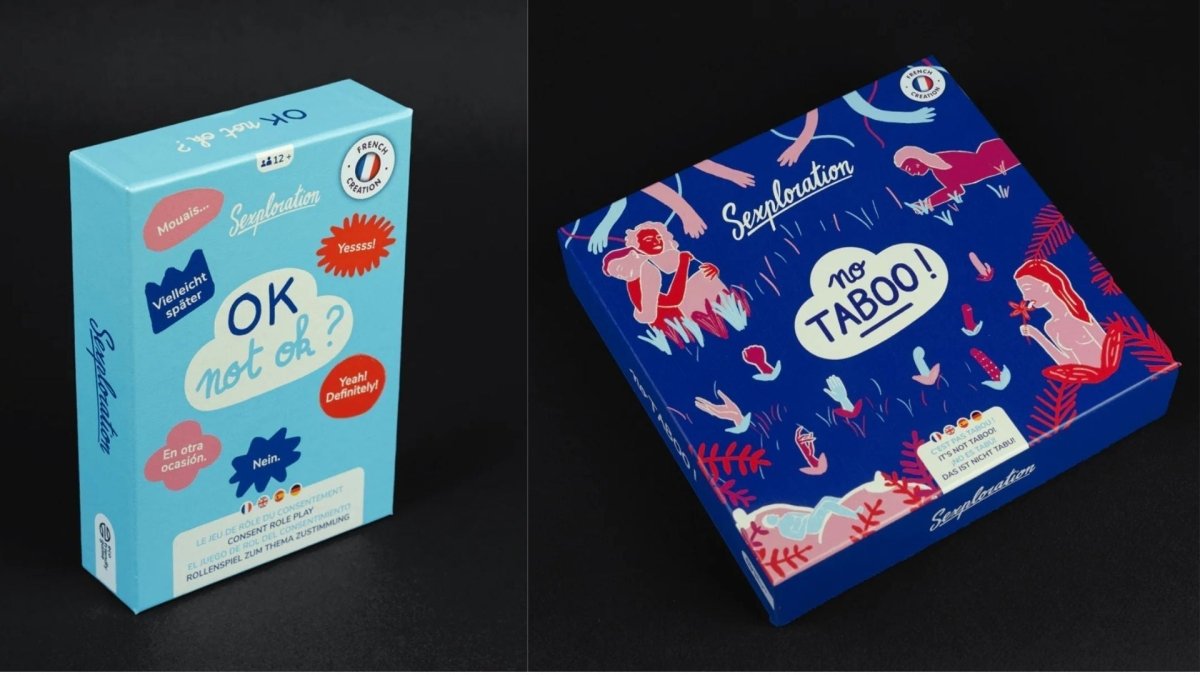
With games like Can You , Memo des métiers , Bataille féministe, No Taboo , and De la glace aux pingouins , the brand offers a new approach: games for teens that make them laugh and think. Games that bring people together. Games that speak to everyone, regardless of their gender, academic level, background, or shyness.
What does it really change?
When a teenager laughs while defending an idea that he did not initially approve of.
When a girl realizes she can “win” without playing a subdued role.
When a boy understands that one can have power without dominating.
When an entire group discusses equality or gender without anyone having imposed it.
That's where the game comes in. Really. It doesn't replace a debate, a workshop, or a conversation. But it can spark anything.
Conclusion: playing is already a way of opening oneself up

Inclusive games are more than just games . They are springboards. Triggers. Catalysts.
By integrating them into homes, classrooms, youth centers, or groups of friends, we create a space where teenagers can finally be curious, critical, free, and human. Without feeling trapped or mocked.
Because ultimately, playing together is already taking a step towards each other.



Leave a comment
This site is protected by hCaptcha and the hCaptcha Privacy Policy and Terms of Service apply.