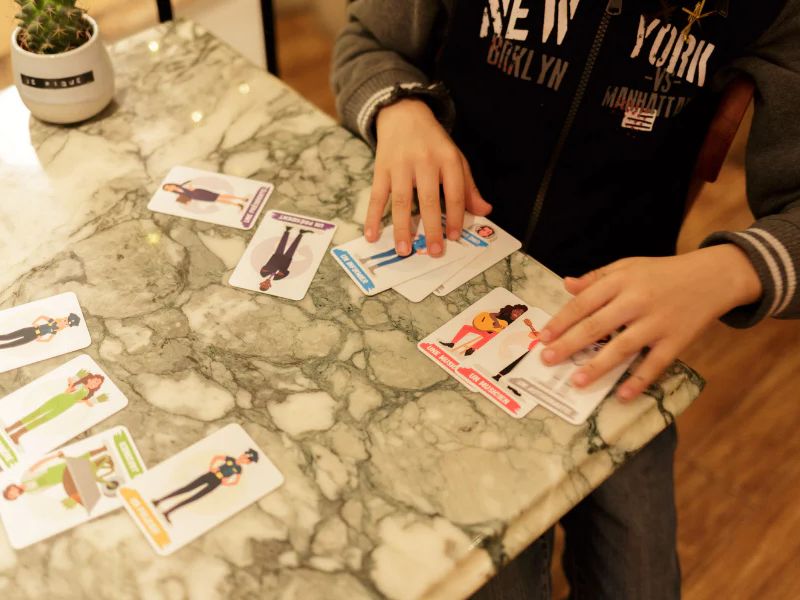
Article: Which games are good for concentration?
Which games are good for concentration?
Why stimulate concentration through play?
Concentration, a key skill at any age
Knowing how to concentrate means being able to stay focused on a task without getting distracted. This skill is essential from a very young age, whether it's for learning to read, following instructions, or solving a problem. But concentration isn't innate: it develops, strengthens… and can also be trained. Like muscles, the more you exercise it, the stronger and more lasting it becomes.
The game: a natural training ground
Unlike school or work-related exercises, games capture attention effortlessly. They rely on intrinsic motivation: we play because they are enjoyable, engaging, and stimulating. This makes them an ideal way to indirectly but effectively improve concentration. Memorizing rules, waiting one's turn, observing, anticipating, adapting one's choices—these are just some of the cognitive micro-skills activated during a game.
At Topla , we have long believed that games are an extraordinary tool for developing psychosocial skills and cognitive abilities.
What neuroscience says
Cognitive science research confirms that play stimulates the brain's executive functions, particularly selective attention, working memory, and inhibitory control (the ability to resist distractions). In children, these functions are still developing. In adults, they can be strengthened or slowed down depending on the environment and habits. Play acts like a "mental gym" that promotes neuroplasticity.
Concentration and pedagogy: a winning combination
In educational settings, play can also make learning enjoyable again. Teachers and educators are increasingly using it to foster engagement, maintain attention over time, and develop autonomy. For children with attention deficit hyperactivity disorder (ADHD), certain targeted games can even complement therapeutic or educational approaches.
A subtle balance between pleasure and high standards
Not all games are created equal: to be effective in terms of concentration, they must offer a good level of challenge without being too complex or too simple. It is in this zone of equilibrium – sometimes called a "flow state" – that the player is fully immersed, focused, and motivated.
Simple but effective games to boost children's concentration (ages 3-10)
At Topla, we have several types of games that can improve concentration and memory:
-
Memo Professions : a memory game where you have to find the same professions illustrated by a woman and a man
-
Memo Emotions : a memory game where you have to find the same emotion illustrated by a girl and by a boy
-
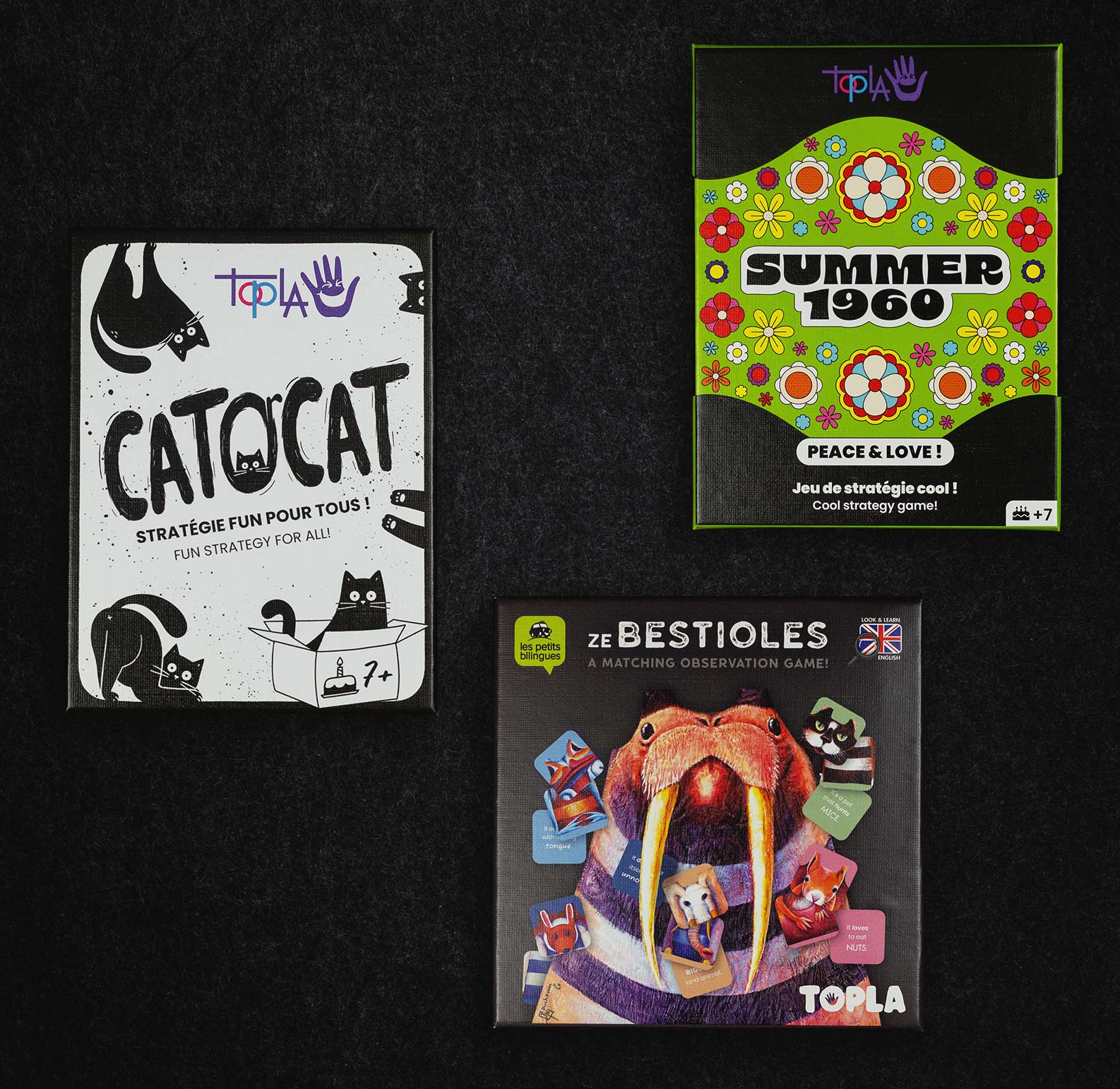
Ze Bestioles : an artistic memory game of fantastic animals. By paying attention to details and colors, you assemble the head and the body.
-
Inspiring 7 Families Game : an easy game where each family is made up of famous or forgotten women
-
Summer 1960
-
Catorcat

Comparative table of the benefits of concentration games:
|
Types of games |
Description |
Benefits |
Memory : working on visual memory and selective attentionExample: Careers Memo |
This classic puzzle remains an excellent exercise in concentration. The child must memorize locations, compare, recall, and use their short-term memory. |
Develops sustained attention, visual memory, and teaches how to wait one's turn. |
The 7 Families game: strengthening listening skills and gentle strategyExample: 7 inspiring families |
Behind its apparent simplicity, this game mobilizes key skills: formulating a clear request, remembering other people's cards, anticipating needs, managing one's emotions in the face of chance.
|
Improves auditory concentration, patience, memory, and frustration management. |
Mental agility games: stimulating reactivity and cognitive flexibility |
Games like Summer 1960 or Catorcat require quick concentration and the ability to react at just the right time, without rushing. |
They train selective attention, eye-hand coordination, and impulse control. |
Teenagers and concentration: games as an antidote to digital distraction
-
Hyperconnected but scattered
Snapchat, TikTok, Instagram… Teenagers spend several hours a day on their screens, often multitasking. As a result, their attention span is fragmented, their working memory is underutilized, and sustained concentration becomes a challenge. This constant digital environment can create a form of addiction to immediate stimulation, making any prolonged cognitive effort (such as reading, listening in class, or staying focused on homework) difficult.
-
The game as a bubble of concentration
Introducing physical games into teenagers' daily lives offers a valuable alternative. Board games , card games , and role-playing games create moments where attention is naturally focused. They require memorizing rules, developing strategies, and demonstrating patience… and above all, they re-engage the brain in processes of sustained concentration, far removed from endless scrolling.
-
Formats that really work with teenagers
-
Strategy or bluffing games (e.g., Summer 1960 or Catorcat): perfect for exercising thinking and anticipation.
-
Party games or cooperative games : they reintroduce real social dynamics, with verbal exchanges, eye contact, and coordination (e.g., No Taboo) . (from age 14).
-
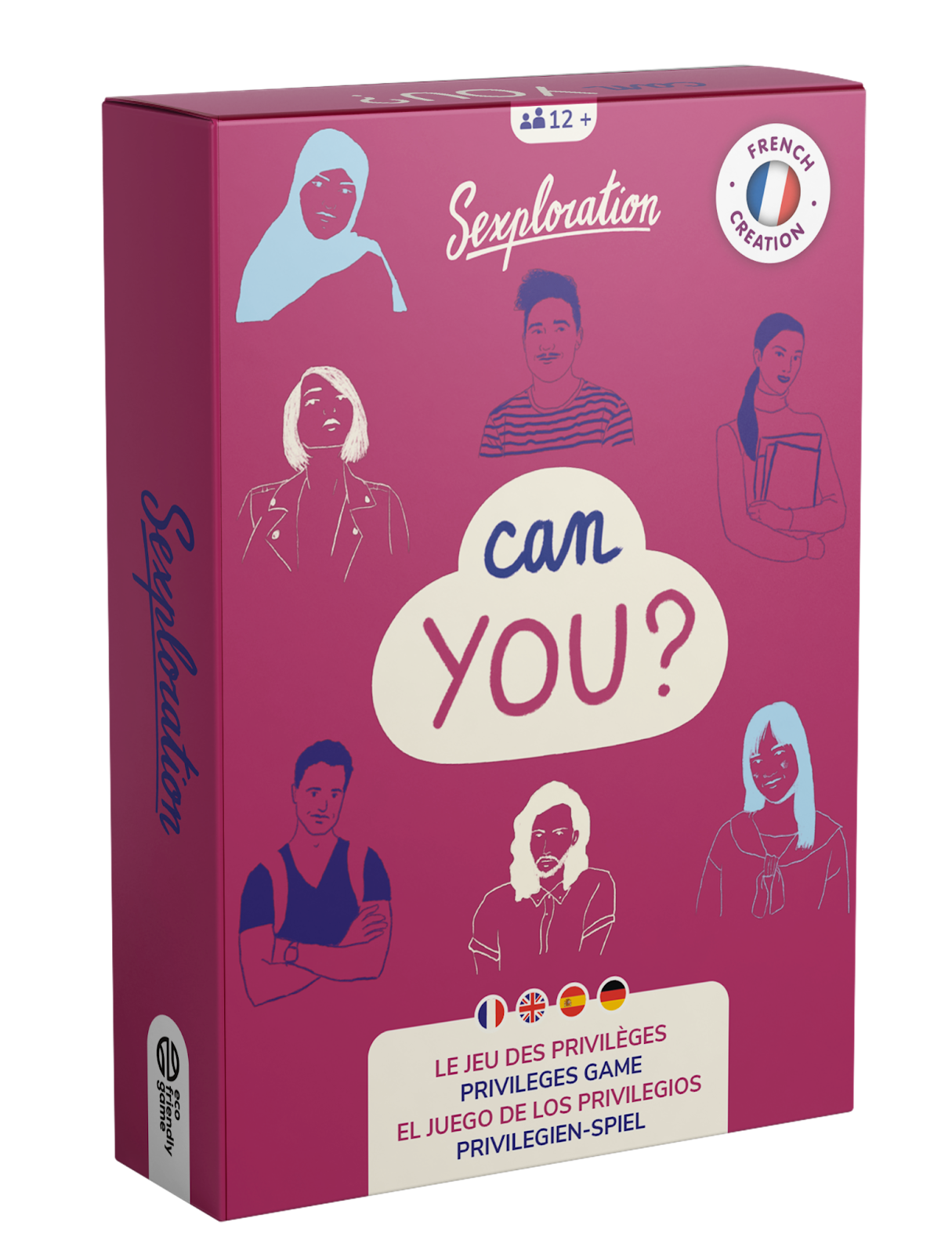
Role-playing games (RPGs) : in small groups, they develop concentration, creativity, oral expression, and imagination, while requiring constant attention to the story, e.g., Can you? or OK not OK
Connection, pleasure, mental calm
Beyond the cognitive benefits, these games offer teenagers a respite, a form of "active disconnection" that is beneficial for the brain. It's also a way to reconnect with others – away from screens – in a fun, judgment-free, and pressure-free environment.
Why stimulate your memory and concentration even in adulthood?
Essential mental exercise
Like the body, the brain needs training to maintain its performance. However, after a certain age, it's easy to fall into a routine that no longer adequately stimulates cognitive abilities. Working on concentration, memory, and analytical speed helps slow the natural decline of executive functions and maintain alertness in daily life, both personal and professional.
Concentration and memory: two allies of performance
In an increasingly digitally driven environment, attention is becoming a true superpower. Whether it's for leading a meeting, managing complex projects, learning new skills, or simply reading a book without getting distracted, mental games can strengthen these essential abilities.
Prevention is better than cure: a key to aging in good health
Numerous studies show that regular playful activities (memory, logic, and strategy games) are associated with a reduced risk of age-related cognitive decline, such as neurodegenerative diseases. In other words, stimulating your brain can truly contribute to active and healthy aging.
Which games are best for adults?
-
Puzzles and logic games : to train working memory and perseverance (ex: Summer 1960).
-
Strategic or observation card games : to keep the mind sharp and promote neural connections (e.g., Skyjo, Timeline, The Mind, Catorcat).
-
Applications and serious digital games : many scientifically validated tools exist to maintain memory and attention.
-
Collaborative games : when played with several people, the effect is multiplied tenfold, because emotion, communication and shared motivation are added.
Regular practice, even for short periods, makes a difference.
No need to spend hours on it: 10 to 15 minutes a day of mental games can be enough to activate the right cognitive circuits. Ideally, vary the formats and difficulty levels to avoid boredom and stimulate different areas of the brain.
How to choose the right game to develop concentration?
Not all games stimulate concentration in the same way. To be effective, they must be chosen according to the age, the person's profile… and the type of attention to be developed.
Rapid or sustained concentration?
-
To work on rapid concentration (being attentive to a brief stimulus), favour games like Dobble , Jungle Speed or Bataflash .
-
To develop sustained concentration , it is better to play calm and structured games such as Memory , puzzles , or simple strategy games .
Adapt the game to the profile of the child or adult
-
For those who are impatient : short, dynamic games, with a bit of luck to keep the interest going.
-
For anxious or easily distracted people : cooperative games or games without elimination, to avoid pressure.
-
For very energetic children : alternate with motor games or include a movement component (mime, cards to fetch, etc.).
Duration, frequency, level: it's better to have small but regular levels
A game that's too long or too complex can be discouraging. Ten minutes of focused play is better than an hour of half-hearted attention. Gradually adjusting the difficulty allows for real progress.
Conclusion: Games that improve concentration and mental agility have yielded excellent results.
Games are fantastic fun tools to promote concentration and at Topla we offer several for both children and adults.
If you'd like more tips on developing children's concentration, you can find out more on the Educatout website.